Agentic AI Architecture in 2026: How to Build Secure Multi-Agent Systems with MCP
👤 AcadKits📅 June 12, 2026⏱️ 8 min read👁️ 232 views
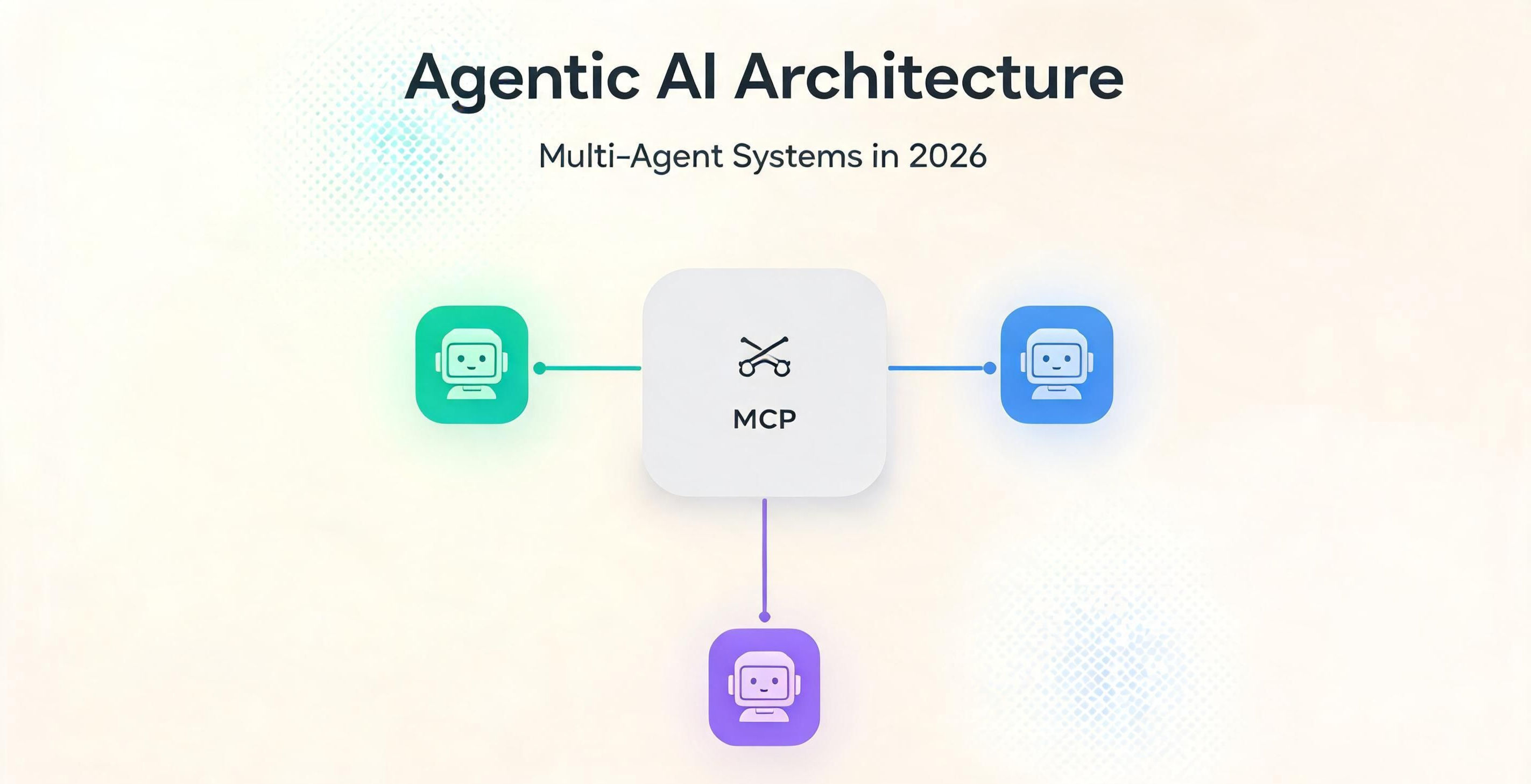
Generative AI started as a prompt-and-response experience. A user asked a question, a model replied, and the interaction ended there. That pattern still works for simple tasks, but modern software teams now expect AI systems to plan steps, use tools, retrieve data, coordinate work, and ask for approval before taking sensitive actions. That shift is why agentic AI has become one of the most important architectural ideas in 2026.
Instead of relying on one large model to do everything, developers are increasingly designing systems where multiple specialized agents work together under clear boundaries. One agent may gather requirements, another may write code, another may validate outputs, and another may check security or compliance before anything is deployed. This structure is usually called a multi-agent system, and it is becoming a practical pattern for complex automation.
“In 2026, the real advantage is not just using AI. It is designing systems where models, tools, approvals, and policies work together reliably.”
Agentic AI refers to AI systems that do more than generate content. They can reason through a task, break it into steps, call tools, retrieve context from external systems, and continue execution toward a goal. In practice, an agent is not magic. It is usually a model wrapped with instructions, tool access, memory or state, runtime constraints, and a decision loop.
This distinction matters. Traditional generative AI is great at producing text, summaries, code snippets, or images from a prompt. Agentic AI focuses more on execution: planning, tool use, validation, and controlled action across external systems.
A multi-agent system splits a large workflow into smaller responsibilities handled by different agents. Each agent has a narrow role, a limited toolset, and a clear success condition. That makes the system easier to debug, safer to operate, and often more reliable than asking one model to do everything at once.
For example, in a software delivery workflow:
The goal is not to create more agents just for complexity. The goal is to isolate responsibility. When each agent handles a smaller decision space, errors become easier to detect and cheaper to fix.
A single-agent setup can work well for lightweight tasks like drafting emails, summarizing documents, or answering support questions. Problems appear when the workflow becomes long, stateful, and dependent on external systems. One model now has to remember context, decide the plan, call the right tools, validate results, recover from failure, and stay within policy boundaries.
That is where multi-agent design becomes useful. Instead of one overloaded loop, an orchestrator can hand off work to agents with specific roles. The system becomes more modular, and teams can improve one part of the pipeline without redesigning everything else.
One of the biggest bottlenecks in agent development has been tool fragmentation. Every time a team wanted an AI system to access files, databases, APIs, or internal platforms, they often had to build custom connectors and middleware. That made agentic systems harder to scale and maintain.
Model Context Protocol (MCP) was introduced as an open standard for connecting AI applications to external data sources and tools. According to Anthropic and the MCP specification, the protocol standardizes how applications share context, expose tools, and build integrations using a host-client-server model over JSON-RPC. In simple terms, MCP gives developers a more uniform way to connect AI systems with real tools and real data.
At the protocol level, MCP supports concepts such as:
This is important because teams no longer need to reinvent every integration pattern from scratch. They can focus more on orchestration, safety, and workflow design instead of writing one-off adapters for every system.
If you are building a production-ready agentic system in 2026, think in layers instead of prompts. Strong systems usually include the following architecture blocks:
| Layer | What it does | Why it matters |
|---|---|---|
| Interface Layer | User chat, dashboard, task queue, approvals UI | Keeps humans informed and in control |
| Orchestration Layer | Routes tasks between agents, manages retries, sequencing, and handoffs | Prevents chaos and keeps workflows deterministic |
| Agent Layer | Specialized agents for planning, retrieval, execution, review, and validation | Creates modular, easier-to-debug workflows |
| Context Layer | Memory, retrieval, state, knowledge bases, document access | Gives agents the right information at the right step |
| Tool / MCP Layer | Files, databases, APIs, SaaS tools, dev environments, sandboxes | Lets agents act on real systems in a controlled way |
| Guardrail Layer | Policy checks, budget limits, access controls, approvals, content filters | Reduces security, compliance, and reliability risks |
| Observability Layer | Logs, traces, evals, audit trails, cost tracking, run history | Makes the system measurable and governable |
A common mistake in agentic design is assuming full autonomy is the goal. In most business systems, that is the wrong target. The best workflows are not the ones that remove humans entirely. They are the ones that let humans review the right decisions at the right moment.
For example, a system can autonomously gather evidence, draft code, prepare a deployment plan, and run validation checks. But before production release, database migration, payment execution, or sensitive document changes, the workflow should pause for approval. This human-in-the-loop model is also consistent with MCP’s own security guidance, which emphasizes user consent, authorization, and clear control over data access and tool invocation.
Agentic systems should not operate with unlimited freedom. Strong guardrails make the difference between a useful automation platform and an expensive debugging problem.
Another thing that separates a demo from a real system is state management. Multi-agent workflows rarely succeed with prompt history alone. They need short-term working memory for the current task, long-term memory for reusable context, and durable state for task progress, retries, approvals, and rollbacks.
That is why the orchestrator is so important. It is not just a traffic manager. It decides which agent should act next, what context should be passed forward, when a human should be asked for approval, and when the workflow should stop because a policy or quality threshold has not been met.
Imagine a user submits a request: “Add team-based billing to our SaaS product.” A well-designed agentic stack might handle it like this:
This structure is slower than blind automation, but much safer and more realistic for production systems.
Yes. Teams with strict privacy or compliance needs can run agentic systems in private environments using local orchestration, internal tool servers, private vector stores, and smaller or self-hosted models where appropriate. The exact setup depends on latency, model quality, and data sensitivity, but the architecture pattern itself does not require public-cloud-only deployment.
Developers no longer get much leverage from prompting alone. The high-value skill is now architectural: how to decompose a task, assign responsibilities to agents, connect those agents to tools, constrain them with policies, and keep humans in control where it matters.
In other words, the future is not one giant model doing everything. It is well-designed systems where models, tools, protocols, memory, and governance all work together.
Building orchestration flows, tool boundaries, validation layers, and secure integrations from scratch can take significant setup time. AcadKits helps reduce that friction with starter kits, structured repositories, and practical project templates designed for modern agentic development.
If you want to launch faster, use templates that already include clean handoff logic, modular agent roles, and production-minded safety layers. That way, your team can spend less time on boilerplate and more time on product-specific intelligence.
AcadKits provides ready-made engineering projects, custom development services, and free developer tools for students.
Conversational AI for Finance: Trusted Answers from ERP & Accounting Data
⏱️ 3 min read
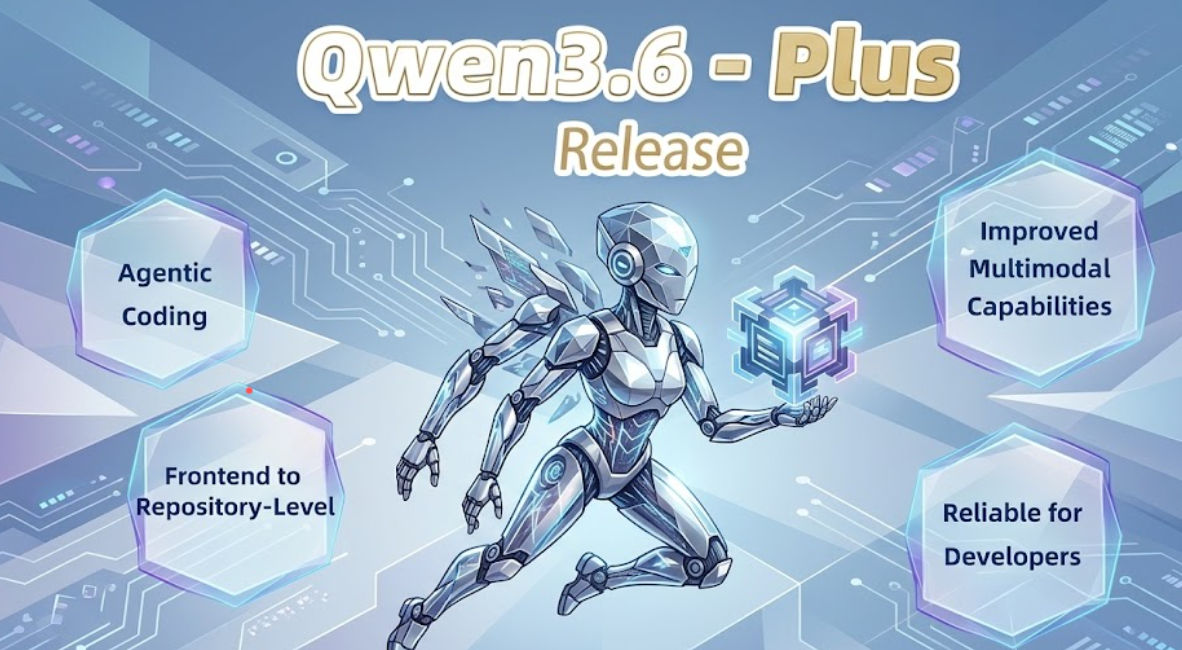
A comprehensive look at Qwen3.6-Plus, its groundbreaking capabilities in agentic coding and multimodal reasoning, and how engineering students can leverage it for real-world projects.
⏱️ 6 min read